
 EN
EN
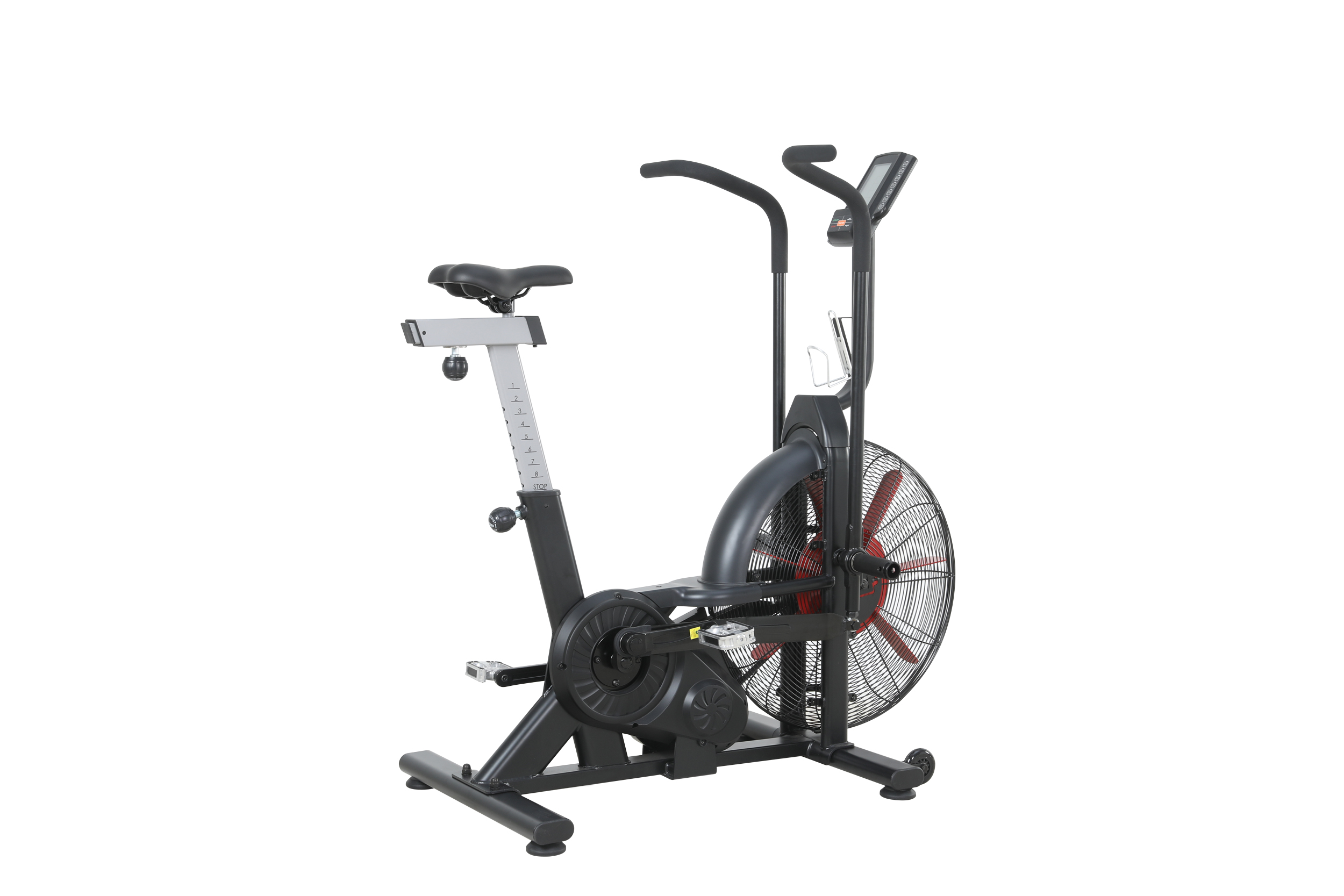
Navigating international import regulations for fitness equipment requires careful attention to detail. Brand owners, gym chains, and equipment distributors face strict regulatory oversight in both North American and European markets. Passing customs clearance smoothly and protecting consumers from injury depends on understanding physical safety standards, electrical certifications, wireless compliance, and mandatory labeling.
Structural Integrity and Physical Load Benchmarks
Strength training apparatus and motorized cardio machines undergo rigorous physical evaluation before entering the United States market. The governing specifications for these machines—ASTM F2276 for strength equipment and ASTM F2277 for stationary cardio units—establish clear structural safety metrics.
A central requirement of these ASTM standards is static load testing. Equipment must withstand 2.5 times its maximum rated user weight without suffering permanent frame bending or joint deformation. For instance, a weight bench rated for 300 pounds must support a static load of 750 pounds during laboratory testing. Beyond weight capacity, testing protocols evaluate potential body entrapment points, shear risks, sharp edges, and pinch points around cables, pulleys, and moving levers.
Product surveillance reports highlight thousands of emergency room visits each year caused by equipment failure or instability. As a result, customs officials, commercial insurers, and major retail distributors expect verified proof of compliance. Importers must secure accredited test reports confirming that every production batch satisfies ASTM structural safety requirements before shipping cargo across borders.
Electrical Safety Requirements for Motorized Fitness Gear
Treadmills, stationary bikes, rowers, and ellipticals with motorized components or electronic displays must meet strict electrical safety standards. In the United States, UL 1647 serves as the benchmark for motorized exercise equipment. In Canada, CSA C22.2 No. 61010-1 governs electrical apparatus, a standard widely recognized across North America.
UL 1647 focuses on preventing electrical shock, thermal buildup, and fire risks during continuous high-load operations. Testing procedures push electrical insulation, grounding continuity, leakage current, and internal motor temperature thresholds to their limits. Meanwhile, CSA C22.2 No. 61010-1 emphasizes electronic control safety, requiring fail-safe mechanisms that prevent unexpected belt acceleration, sudden stops, or touchscreen lockups.
Failing to meet these safety expectations carries significant financial consequences. Product recalls caused by faulty wiring or sudden motor stops can cost millions in damages, legal claims, and brand erosion. Importers should insist on sourcing motorized fitness products built with certified components and evaluated by a Nationally Recognized Testing Laboratory (NRTL).
Digital Fitness, Medical Classifications, and EMI Compliance
Modern connected gym equipment frequently features Bluetooth connectivity, Wi-Fi antennas, touchscreen consoles, and physiological monitoring sensors. Integrating smart electronics brings equipment under additional regulatory frameworks managed by the FDA and the FCC.
When fitness equipment is marketed with recovery, rehabilitation, or pain-relief claims, the U.S. Food and Drug Administration may classify the product as a physical medicine device under 21 CFR Part 890. Class I devices require general manufacturing controls, while Class II devices demand a formal 510(k) premarket notification prior to commercial distribution. Importers must review product marketing copy to ensure compliance with FDA device registration requirements.
Simultaneously, wireless components and smart consoles generate radio frequency energy, triggering Federal Communications Commission (FCC) Part 15 regulations. Importers must perform electromagnetic interference (EMI) testing at accredited facilities to confirm that digital displays and radio transmitters do not interfere with nearby electronics. Obtaining an official FCC ID and filing a Supplier’s Declaration of Conformity prevents customs border delays and avoids daily regulatory non-compliance fines.
European and British Market Access Standards
Distributing fitness gear across the European Economic Area and Great Britain requires meeting specialized regional standards. European market access relies on harmonized benchmarks EN 957 and ISO 20957, which dictate technical requirements for stationary training equipment.
| Specification | Target Application | Primary Evaluation Focus |
| Class S | Professional / Commercial Gyms | High-frequency usage, heavy load endurance, structural fatigue |
| Class H | Home / Light Commercial | Periodic home use, basic load stability, child-safety guards |
| Class I | Specialized / Medical Fitness | Ergonomic accessibility, assisted movement, specific safety stops |
EN 957 and ISO 20957 categorize equipment into usage classes—such as Class S for commercial facilities and Class H for home environments. Commercial Class S treadmills and power cages undergo extensive cyclic fatigue testing, replicating thousands of hours of intense use. Testers assess frame deflection, drive belt endurance, welds, and handrail stability under maximum dynamic load conditions.
To affix the CE mark and issue an official Declaration of Conformity under the Machinery Directive 2006/42/EC, manufacturers must verify compliance with EN 957 standards. Following Great Britain's transition to the UKCA mark, British authorities continue to accept CE-marked gym gear under current extension policies. However, maintaining comprehensive technical files that align with both EU and UK regulations ensures uninterrupted cross-border distribution.
Essential Customs Logistics and Product Traceability
Clearance at international ports depends as much on documentation accuracy as on physical product quality. Importers must maintain a complete compliance binder containing the Commercial Invoice, Packing List, Bill of Lading, and Importer Security Filing (ISF 10+2) submitted at least 24 hours prior to vessel departure. Continuous customs bonds are equally essential to cover duties, tariffs, and potential port fees.
Port authorities enforcement officers routinely inspect cargo for proper product markings. Every gym machine must display permanent, legible labeling detailing the manufacturer name, model designation, production batch code, and country of origin. Warning labels outlining maximum weight limits, operation instructions, and pinch hazards must be permanently affixed in the destination market's official language. Clear, visible labeling protects consumers while providing an essential legal defense against product liability claims.
Third-Party Testing versus Self-Declaration Risks
Relying on factory self-declarations without independent verification poses significant supply chain risks. Industry audits reveal that nearly two-thirds of self-certified fitness products fail when subjected to independent third-party lab testing. Deficiencies typically involve poor frame weld quality, substandard electrical wiring insulation, or inaccurate load rating claims.
Working with accredited third-party testing laboratories helps eliminate these risks. Independent test reports prove compliance with ASTM, EN, UL, and FCC standards, giving customs agencies, commercial clients, and insurance providers full confidence in product safety.
Streamlining Global Equipment Sourcing with Fitsply
Navigating complex international safety standards requires a reliable manufacturing and supply chain partner. Fitsply specializes in commercial fitness equipment engineering, OEM/ODM manufacturing, and end-to-end export compliance management. From raw material selection to automated robotic welding, Fitsply enforces strict quality control standards at every stage of production.
Fitsply integrates structural, electrical, and wireless compliance into the initial design process. Equipment manufactured by Fitsply undergoes rigorous pre-shipment testing to ensure full alignment with ASTM F2276/F2277 load benchmarks, EN 957 performance classes, UL electrical safety guidelines, and FCC radio frequency rules. By partnering with accredited third-party laboratories, Fitsply provides complete, verified technical documentation files that streamline customs clearance in North America, Europe, and global markets.
Businesses seeking to scale their gym equipment inventory can count on Fitsply for high-precision manufacturing, reliable supply chain management, and full regulatory compliance.
Table of Contents
- Structural Integrity and Physical Load Benchmarks
- Electrical Safety Requirements for Motorized Fitness Gear
- Digital Fitness, Medical Classifications, and EMI Compliance
- European and British Market Access Standards
- Essential Customs Logistics and Product Traceability
- Third-Party Testing versus Self-Declaration Risks
- Streamlining Global Equipment Sourcing with Fitsply

